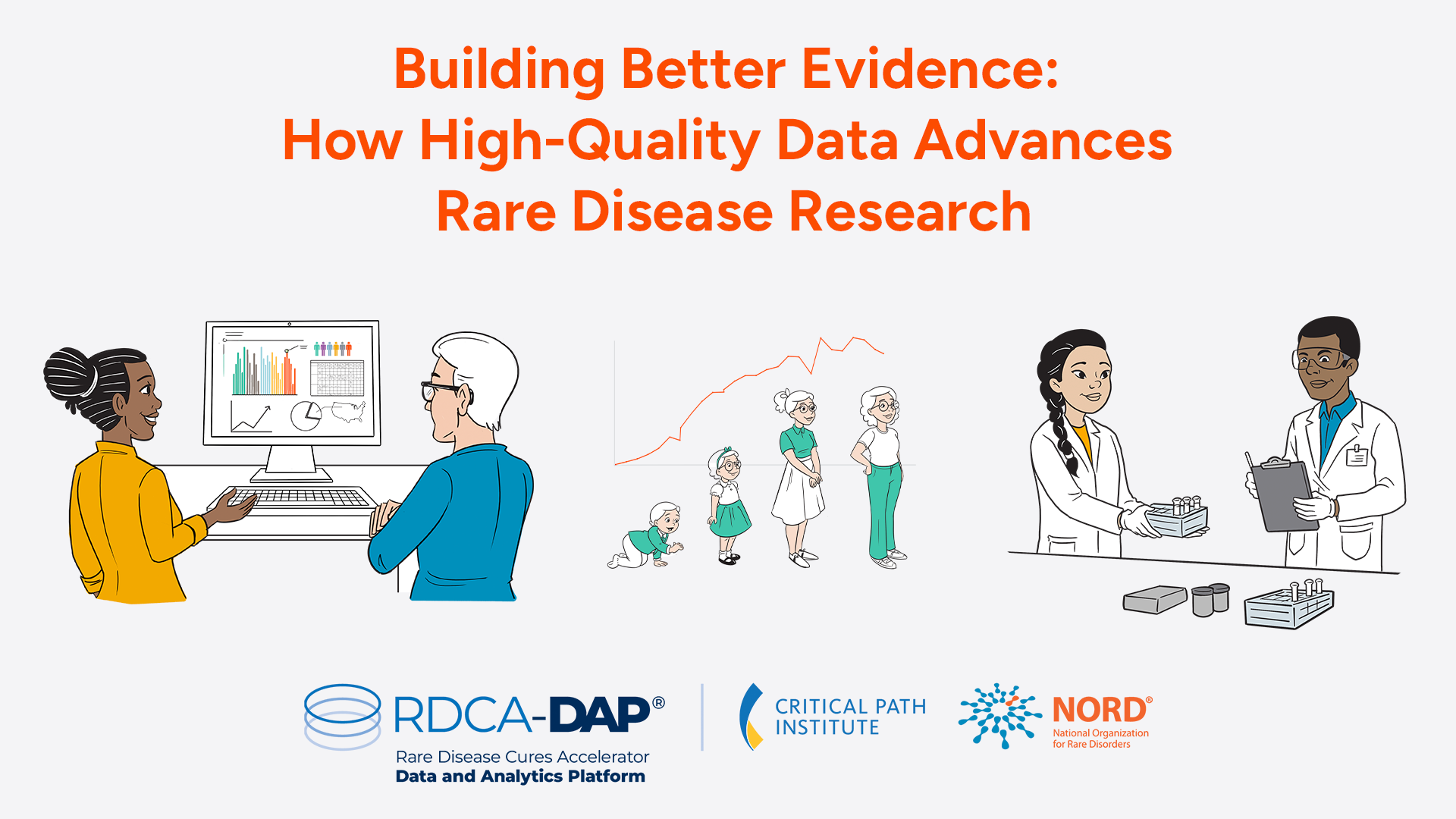
Building Better Evidence: How High-Quality Data Advances Rare Disease Research
About Course
Good research depends on good information. Patients and caregivers provide valuable information about what it is like to live with a rare disease. Research studies collect information to better understand diseases and potential treatments. When that information is collected carefully and reflects the experiences of people affected by a disease, it can provide valuable data that researchers can learn from and trust.
For rare diseases, getting useful data can be especially challenging. Studies may involve small numbers of people, diseases can affect people in different ways, and every participant’s contribution can be especially valuable. That makes it important to think carefully about what data are collected, who is represented, how the data are collected, and how they can be used in the future.
In this course, you’ll explore how patients, caregivers, and patient advocacy organizations can help shape rare disease research from the beginning. You’ll learn what makes research data useful and trustworthy, why participation and continued involvement in studies matter, and how sharing well-organized data can help one person’s contribution go even further.
By understanding how better data lead to better evidence, you’ll be better prepared to participate in conversations and decisions that can help advance rare disease research and treatment development.
After completing this course, you will be able to:
- Describe how information from patients, caregivers, and patient advocacy organizations can help shape rare disease research and treatment development.
- Explain why high-quality data are important for understanding diseases and evaluating potential treatments.
- Explain how who participates in research and whether participants remain involved can affect the quality and usefulness of study results.
- Describe how planning for data sharing and collecting information in consistent ways can help data contribute to future rare disease research.
Most importantly, this course will show how patients and caregivers aren’t simply the people data are collected from. Their experiences, priorities, participation, and decisions about their data are part of how better rare disease evidence gets built.
Course Content
Module 1: How Patient Data Supports Drug Development
-
Introduction and Learning Objectives
-
Pre-Test: Test Your Knowledge
-
Glossary of Terms in this Module
-
Video: How Patient Data Supports Drug Development
05:28 -
Post-Test: Test Your Knowledge
-
Module Evaluation